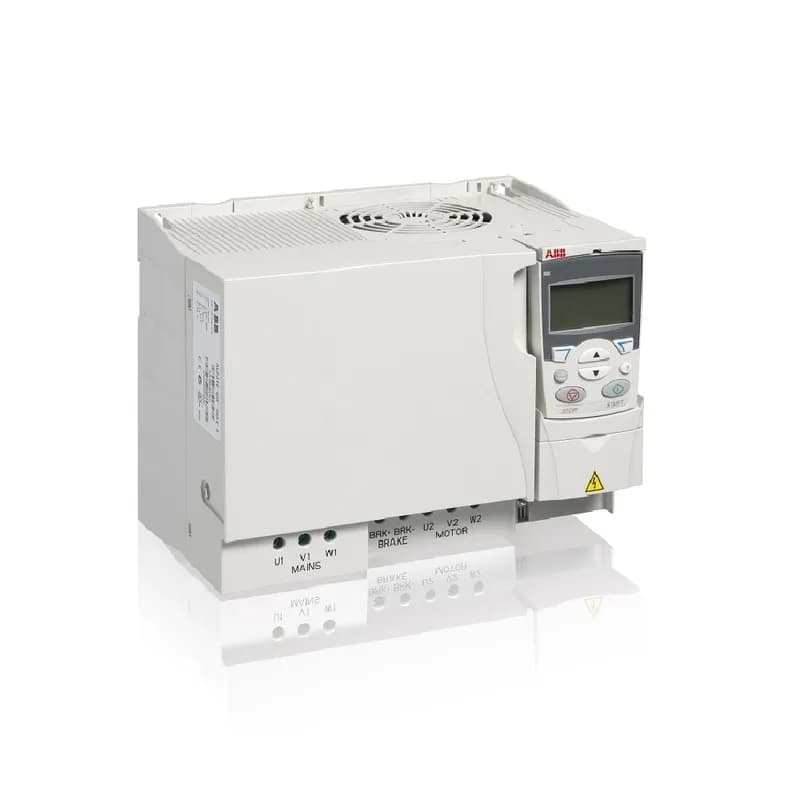
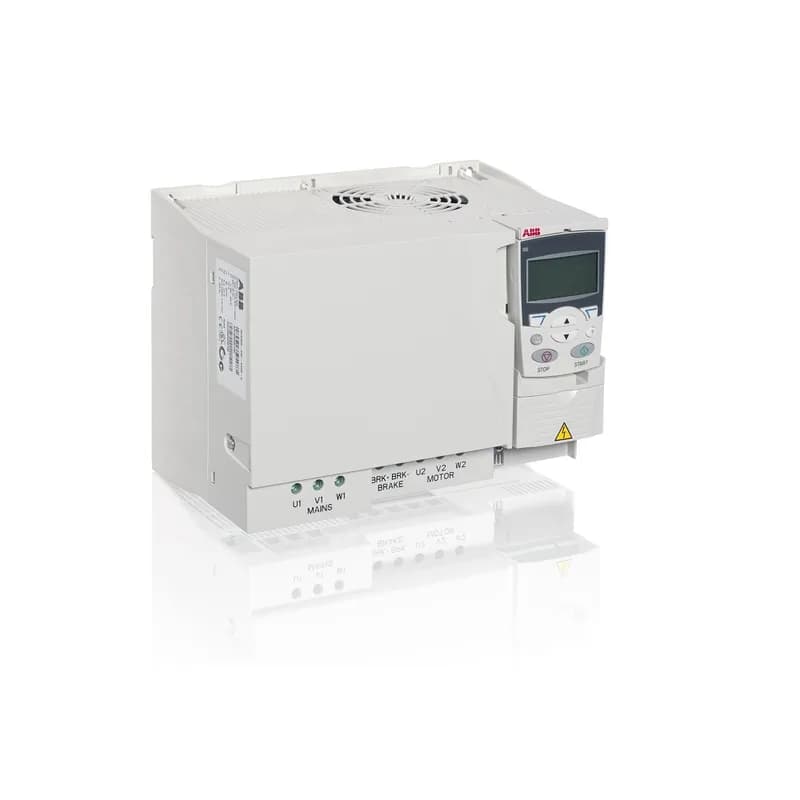
ABB Low Voltage Drives ACS310-03U-50A8-2 ACS310 AC Drive, 3-200-240V In, 15HP, 50.8A, Type OPEN, 1.1 overload, Blank, HxWxD…
Alternate Item Number: 3AUA0000049479
UPC: 662348004029
Documents & Media
Contact for Pricing
Call +1 (262) 252-1600 (toll-free 877-268-3700) or email [email protected] for pricing and availability.
Overview
- 15HP (50.8A) output for 3-phase 200-240V AC input
- Compact open-type design (9.61x10.24x6.65 in) for space-constrained installations
- 1.1 overload capacity optimized for pump and fan applications
- Energy-efficient variable speed control reduces operational costs
- Open chassis (IP00) for indoor panel integration
Specifications
Control Panel | Blank |
Frame Size | R4 |
Horsepower | 15 HP |
Input Phase | 3-Phase |
IP Rating | IP20 |
Mounting | Module |
Output Current | 50.8 A |
Output Phase | 3-Phase |
UL Type | OPEN |
Voltage | 240 V |
Voltage Range | 200-240 V |
Package Dimensions (L x W x H) | 6.65 IN x 10.24 IN x 9.61 IN |
Package Dimensions (L x W x H) | 16.891 cm x 26.0096 cm x 24.4094 cm |
Package Weight (Imperial) | 9.700 L |
Package Weight (Metric) | 4.400 kg |
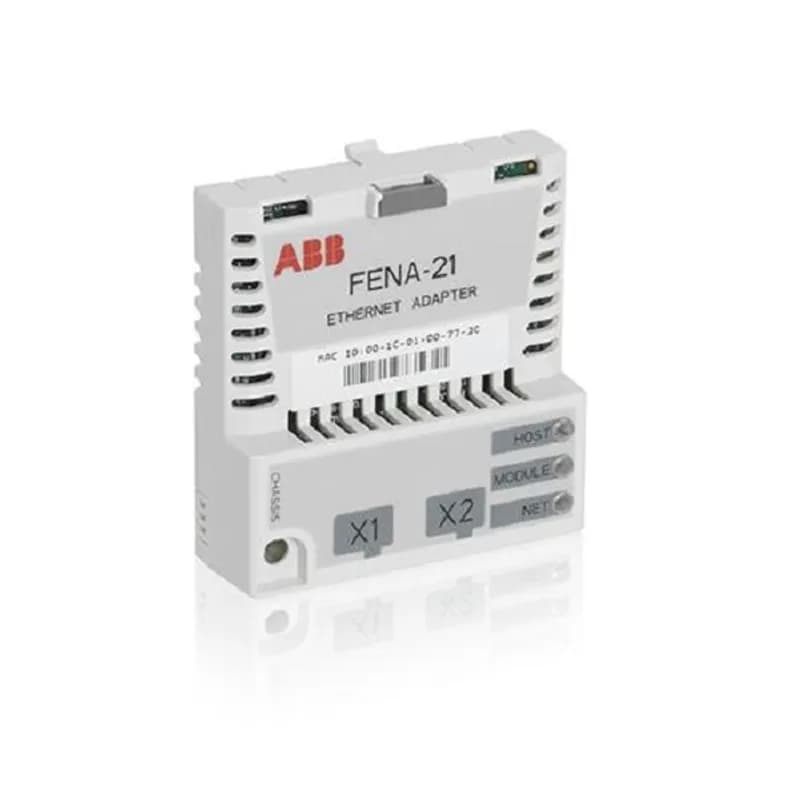
FENA-21
The FENA 21 DualPort module supports Three protocols Modbus-TCP, EtherNet/IP, and the PROFInet IO RT network. The Modbus-TCP protocol is simply the Modbus protocol used on top of Ethernet-TCP/IP. Modbus-TCP is an open Industrial Ethernet network which has been specified by the Modbus-IDA User Organization. EtherNet/IP is based on the Common Industrial Protocol (CIP), which is also the framework for both the ControlNet and DeviceNet network protocols. PROFInet IO RT is an open network based on the PI Organization standard.



Frequently Asked Questions
What is the voltage and power range for ACS310 drives?
ACS310 drives are available in 1-phase (200-240V) from 0.5 to 3 hp, 3-phase (200-240V) from 0.5 to 15 hp, and 3-phase (380-480V) from 0.5 to 30 hp.
What are the main applications for ACS310 drives?
ACS310 drives are dedicated to variable torque applications such as booster pumps and centrifugal fans.
What energy efficiency features are built into ACS310 drives?
ACS310 drives have built-in energy calculators, an energy optimizer for partial loads, and a load analyzer for dimensioning.
What pump and fan control features are included?
The drives include pump and fan control (PFC and SPFC), pipe cleaning, and fill functions for enhanced operation.
What fieldbus interface is embedded in the ACS310?
The ACS310 has an embedded Modbus RTU EIA-485 fieldbus interface. Modbus TCP is available with an SREA-01 option module.
What is the operating ambient temperature range for ACS310 drives?
The drives can operate in ambient temperatures from 14 to 122 °F (-10 to +50 °C), with no frost allowed.
What is the degree of protection for ACS310 drives?
The standard degree of protection is IP20. An optional NEMA 1 enclosure is available.
What motor types are compatible with ACS310 drives?
ACS310 drives are compatible with asynchronous induction motors.
What is the output frequency range for motors connected to ACS310?
The output frequency for connected motors can range from 0 to 500 Hz.
What switching frequencies are available for ACS310 drives?
The available switching frequencies are 4, 8, 12, and 16 kHz. Note that higher frequencies may require derating.